
12 Days Ultimate Northern Tanzania Discovery Safari
Experience the remarkable diversity of Northern Tanzania on a relaxed twelve-day private journey combining wildlife, culture, scenery and time to enjoy each destination without rushing.
The 12 Days Ultimate Northern Tanzania Discovery Safari has been created for travelers who want more than a conventional national park itinerary. It brings together many of the attractions, landscapes, communities and ecosystems that make Northern Tanzania one of Africa’s most rewarding destinations.
Duration
Duration
Trip Highlights
- Private safari with an experienced Tanzanian guide
- Guided walking safari and wildlife experience in Arusha National Park
- Elephant-filled Tarangire National Park and iconic baobab landscapes
- Mto wa Mbu cultural experience with local communities and traditions
- Lake Manyara safari beneath the Great Rift Valley escarpment
- Hadzabe and Datoga cultural encounters around Lake Eyasi
- Respectful Maasai cultural experience in the Ngorongoro Highlands
- Ngorongoro Crater safari with exceptional wildlife concentration
- Three nights exploring the Serengeti wilderness
- Year-round predator viewing and diverse wildlife habitats
- Optional Serengeti hot-air balloon safari
- Scenic flight back to Arusha
Interested in this safari?
Get in touch with our travel experts for a personalized quote tailored to your preferences and travel dates.
Inquire NowTrip Itinerary
Make an InquiryYou May Encounter
- Elephant
- Lion
- Leopard
- Cape buffalo
- Black rhinoceros
- Wildebeest
- Plains zebra
- Cheetah
- Flamingos and other waterbirds
- Giraffe
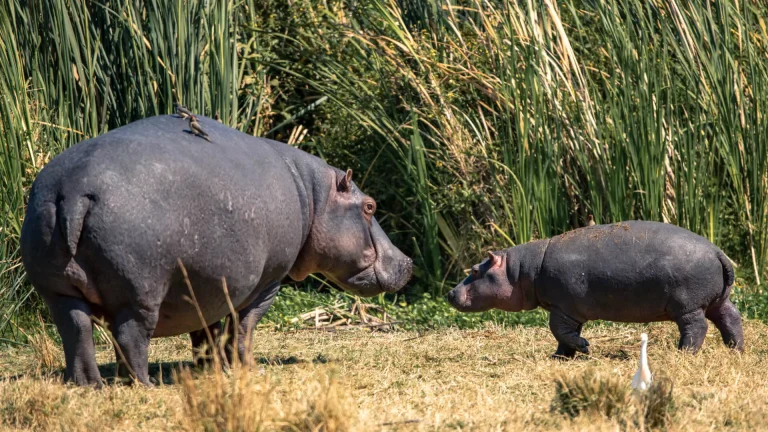
- Hippopotamus
- Nile crocodile
and many more…
Arrival in Tanzania and Transfer to Arusha
Airport Welcome • Private Transfer to Arusha • Safari Briefing & Relaxation
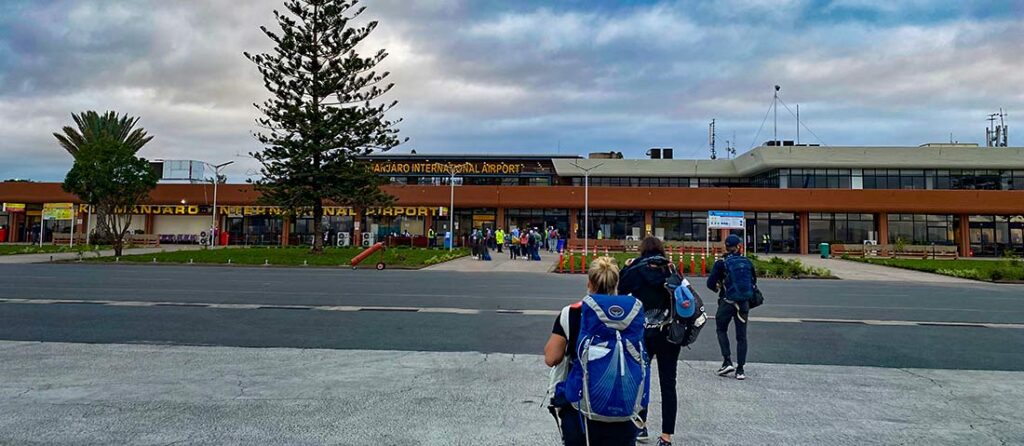
Upon arrival at Kilimanjaro International Airport or Arusha Airport, you will be welcomed by a Quest Horizon Safaris representative.
After assistance with your luggage, travel privately to your accommodation in Arusha.
Arusha is located close to the southern slopes of Mount Meru and serves as the principal gateway to Northern Tanzania’s safari circuit.
Depending on your arrival time, spend the remainder of the day relaxing after your journey. You may enjoy the lodge gardens, swimming pool, restaurant or other available facilities.
Later, your guide or company representative will provide a detailed safari briefing covering:
- The planned route
- Expected driving times
- National Park regulations
- Wildlife-viewing etiquette
- Cultural-tourism guidelines
- Luggage arrangements
- Meals and drinking water
- The Serengeti flight
- Safety and emergency procedures
Dinner and overnight in Arusha.
Arusha National Park Walking Safari and Game Drive
Arusha National Park • Walking Safari • Mount Meru Landscapes
After breakfast, depart for Arusha National Park.
Although smaller than many of Northern Tanzania’s better-known parks, Arusha National Park offers an exceptional variety of scenery and habitats within a relatively compact area.
The park lies around Mount Meru and includes montane forest, open grassland, volcanic features and a series of alkaline lakes.
Begin with a guided walking safari accompanied by an armed park ranger.
Exploring on foot creates a completely different connection with the landscape. Without the elevated position and engine noise of a vehicle, you become more aware of animal tracks, plants, insects, birds, smells and sounds.
Possible wildlife encountered during the walk may include:
- Giraffes
- Buffaloes
- Zebras
- Warthogs
- Bushbucks
- Waterbucks
- Blue monkeys
- Black-and-white colobus monkeys
The exact route and duration of the walk will depend on park conditions, ranger instructions, wildlife activity and guest fitness.
Continue with a game drive through the forest and toward the Momella Lakes.
The lakes vary in color because of their mineral composition and may attract flamingos, ducks, geese, waders and other waterbirds. Flamingo numbers change according to water levels, food availability and seasonal movements.
On clear days, the park may provide views of Mount Meru and distant Mount Kilimanjaro.
Visit viewpoints overlooking Ngurdoto Crater, a steep-sided volcanic caldera covered by forest and grassland.
Enjoy a picnic lunch or lunch at an appropriate location before continuing the afternoon game drive.
Return to Arusha in the late afternoon.
Dinner and overnight in Arusha.
Arusha to Tarangire National Park
Explore Tarangire • Wildlife Safari • Iconic Baobab Landscapes
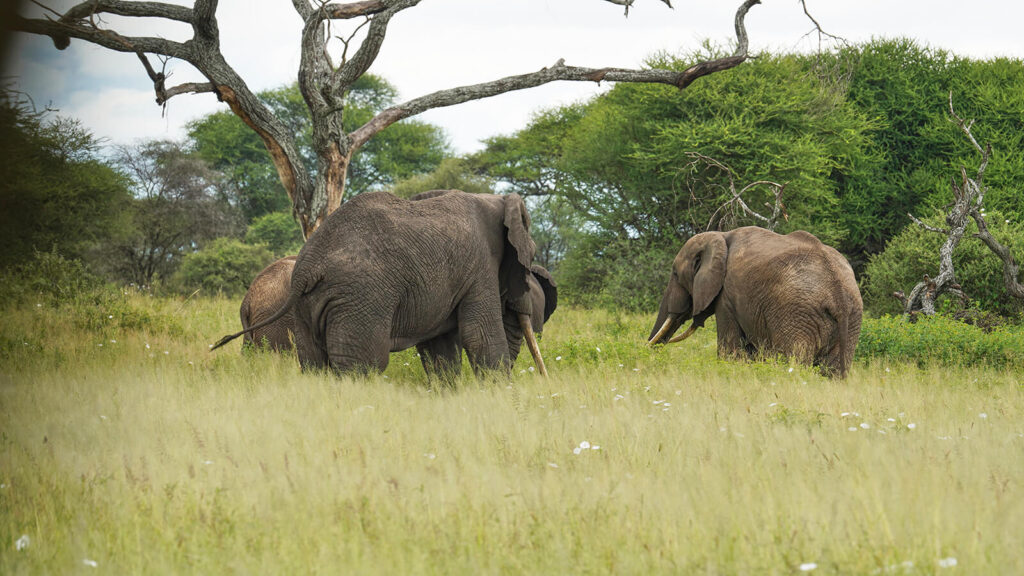
After breakfast, meet your safari guide and depart for Tarangire National Park.
Travel through Arusha’s outskirts, open countryside, agricultural communities and Maasai grazing areas.
Upon arrival, enter the park and begin your game drive.
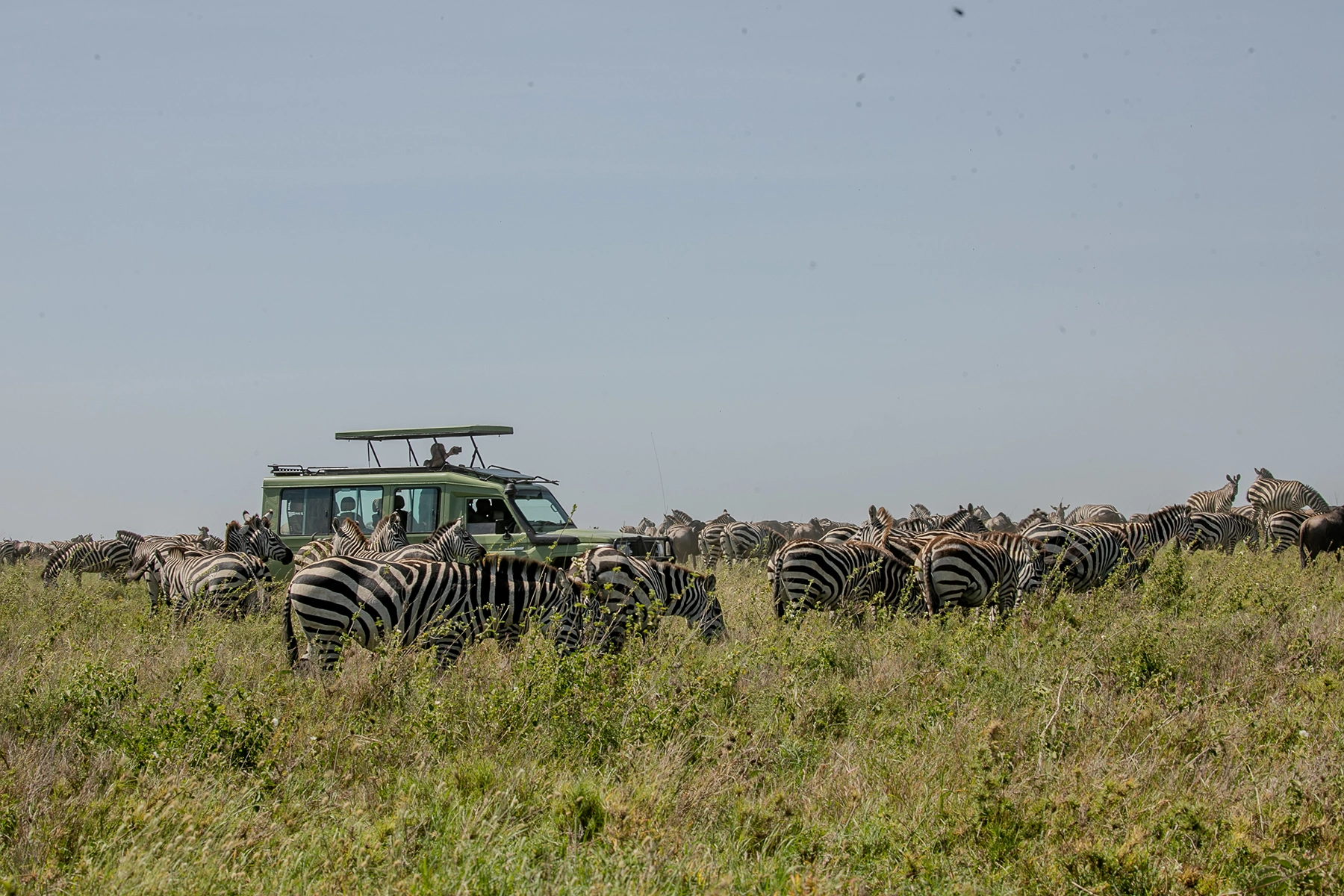
Tarangire is named after the river that flows through the park. During the dry season, this river becomes one of the most important water sources in the region, attracting elephants, antelopes, zebras, wildebeest and predators.
The park is also famous for its ancient baobab trees. Their enormous trunks, unusual shapes and ecological importance create one of Tanzania’s most distinctive safari landscapes.
Possible wildlife sightings include:
- African elephants
- Lions
- Cape buffaloes
- Giraffes
- Wildebeest
- Waterbucks
- Greater kudus
- Lesser kudus
- Warthogs
- Baboons
Tarangire is also known for its birdlife, with a wide variety of raptors, hornbills, rollers, bee-eaters, storks and waterbirds.
Enjoy a picnic lunch in the park and continue exploring during the afternoon.
Your guide will select the route according to current wildlife reports, road conditions, vegetation and seasonal animal movements.
Later, drive to your accommodation in or near Tarangire, Mto wa Mbu, Karatu or the Lake Manyara area, depending on the selected program.
Dinner and overnight.
Full-Day Mto wa Mbu Cultural Experience and Lake Manyara Leisure
Mto wa Mbu Culture • Local Experiences • Lake Manyara Relaxation
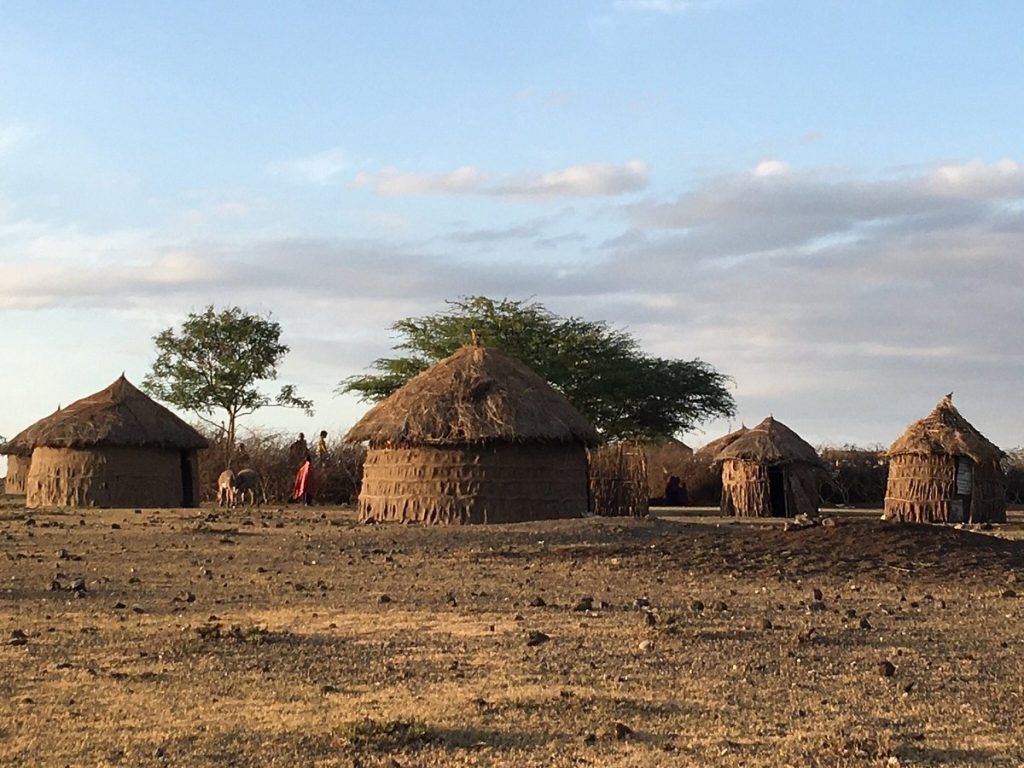
After breakfast, travel to Mto wa Mbu for a full-day cultural experience led by a local community guide.
Mto wa Mbu is located near the entrance to Lake Manyara National Park. The settlement is known for its cultural diversity, agricultural activity and position between the Rift Valley escarpment and surrounding wildlife areas.
The specific activities will be selected according to local conditions, guest interests and community availability.
Your cultural program may include visits to:
- Banana plantations
- Rice-growing areas
- Vegetable farms
- Small workshops
- Woodcarvers
- Painters
- Market areas
- Local food producers
- Traditional brewing activities
- Community development projects
Guided by a local expert, explore Mto wa Mbu’s diverse culture, history, and agricultural practices on foot, by bike, or by vehicle, tailored to your mobility level. Afterwards, savor a traditional Tanzanian lunch before transferring to your Lake Manyara lodge to check in and spend the rest of the afternoon relaxing at your leisure.
Depending on the selected property, you may:
- Relax beside the swimming pool
- Book a spa treatment
- Walk through the gardens
- Watch birds
- Enjoy views of the Rift Valley
- Read or rest
- Review safari photographs
- Enjoy afternoon tea
- Have a quiet drink before dinner
This leisure period is an important part of the itinerary and prevents the journey from becoming a continuous sequence of long activity days.
Dinner and overnight in the Lake Manyara area.
Lake Manyara National Park and Afternoon at Leisure
Rift Valley Landscapes • Wildlife Safari • Evening at Leisure
Enjoy breakfast at the lodge before entering Lake Manyara National Park.
The park occupies a narrow strip of land between the Great Rift Valley escarpment and the lake.
Despite its relatively small size, Lake Manyara contains several distinct habitats, including:
- Groundwater forest
- Acacia woodland
- Open grassland
- Wetlands
- Lake shore
- Hot spring areas
- Seasonal river environments
The groundwater forest near the entrance creates a cool, shaded environment where blue monkeys, vervet monkeys, baboons, bushbucks and forest birds may be found.
Continue into more open habitats in search of elephants, giraffes, buffaloes, zebras, wildebeest, impalas, warthogs and other wildlife.
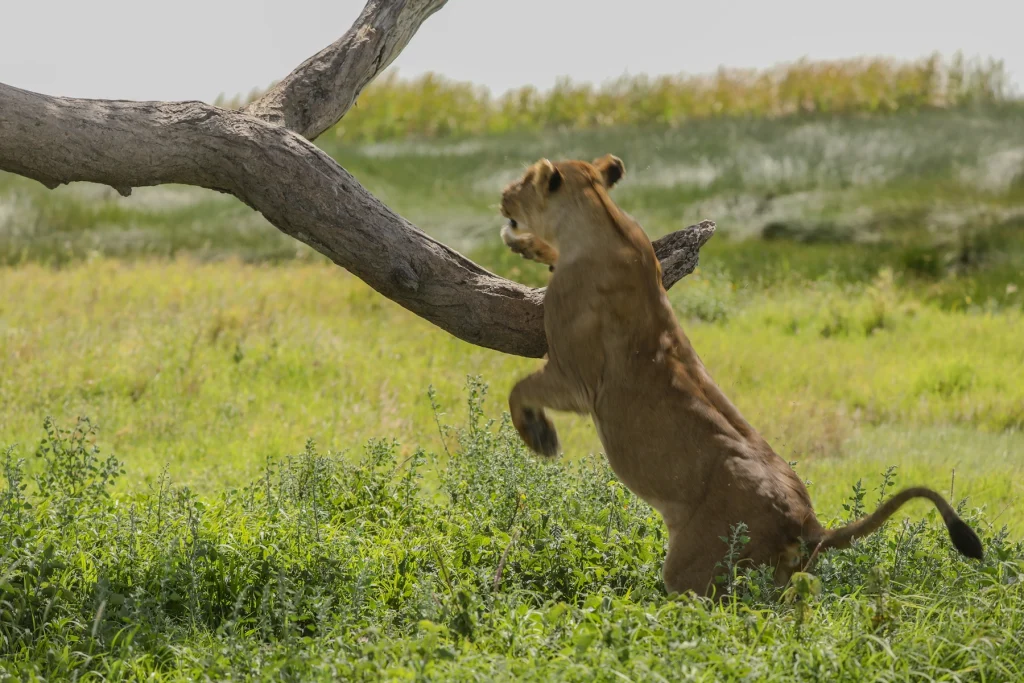
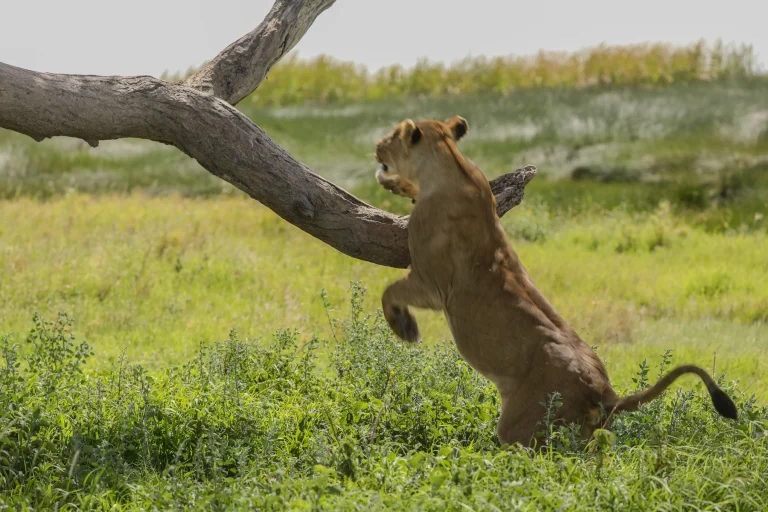
Lake Manyara became internationally known for reports of tree-climbing lions. Lions may still be seen resting in trees or moving through the park, but such behavior is natural, unpredictable and cannot be guaranteed.
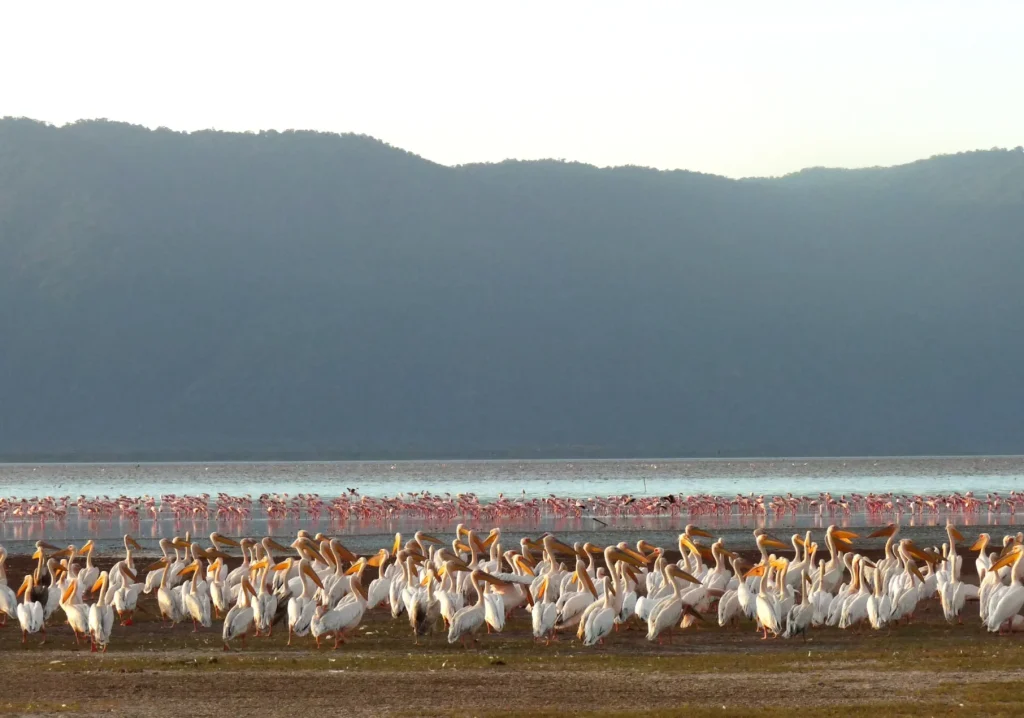
Depending on lake levels and seasonal conditions, the shoreline may support flamingos, pelicans, storks, herons and other waterbirds.
Enjoy a picnic lunch or return to the lodge for lunch, depending on the day’s arrangement.
In the early afternoon, return to your accommodation.
Spend the remainder of the day at leisure.
The slower afternoon allows guests to rest before the journey to Lake Eyasi and the early cultural activities that follow.
Optional lodge activities may include:
- Spa treatment
- Swimming
- Nature walk
- Birdwatching
- Sundowner
- Coffee or tea experience
- Garden walk
- Optional night walk where available
Dinner and overnight in the Lake Manyara area.
Lake Manyara to Lake Eyasi and Datoga Cultural Experience
Discover Lake Eyasi • Datoga Community Visit • Cultural Immersion
After a relaxed breakfast, depart for Lake Eyasi.
The journey passes through farming areas, villages and changing highland scenery before descending toward the Eyasi basin.
Lake Eyasi is a seasonal soda lake located southwest of the Ngorongoro Highlands. The surrounding region is home to several communities, including Hadzabe hunter-gatherers and Datoga pastoralists and metalworkers.
Upon arrival, meet a local guide and visit a Datoga family or community.
The Datoga are traditionally pastoral people whose livelihoods have long been connected to cattle, goats, farming and metalwork.
During the visit, you may learn about:
- Family structure
- Livestock
- Food preparation
- Housing
- Clothing and jewelry
- Farming
- Traditional skills
- Metalworking
- Trade with neighboring communities
A blacksmith demonstration may show how scrap metal is heated, shaped and transformed into tools, knives, arrowheads, ornaments or household objects.
The demonstration depends on the community’s daily activities and should not be treated as a staged performance that must occur at a specific time.
The experience should remain conversational and respectful, with opportunities to ask questions through the local interpreter.
After the visit, continue to your accommodation near Lake Eyasi.
Spend the late afternoon relaxing and preparing for the early start the following morning.
Dinner and overnight at Lake Eyasi.
Hadzabe Experience and Transfer to the Ngorongoro Highlands
Hadzabe Community Visit • Traditional Knowledge • Highland Landscapes
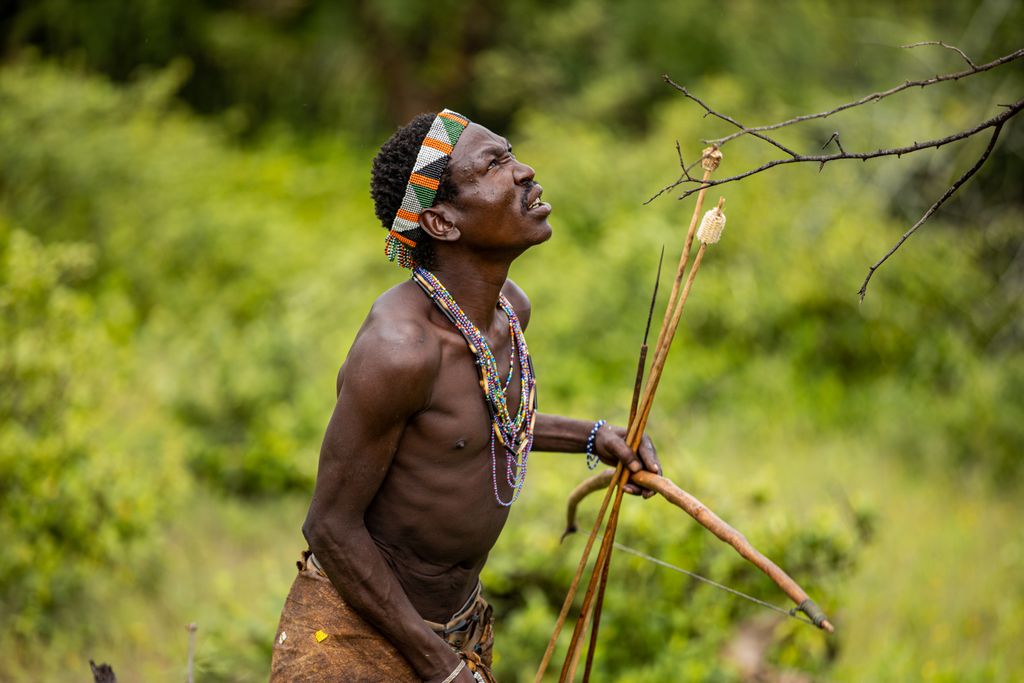
Wake early and travel with a local guide to meet members of a Hadzabe community.
The Hadzabe are one of Tanzania’s remaining hunter-gatherer peoples and have a deep knowledge of the landscapes surrounding Lake Eyasi.
Their traditional way of life has included hunting, gathering wild plants, collecting honey and moving according to water and food availability.
The experience may provide insight into:
- Tracking
- Bush foods
- Medicinal plants
- Honey collection
- Fire-making
- Bow-and-arrow skills
- Language
- Family life
- Environmental knowledge
- Changes affecting the community
Depending on the day, guests may accompany community members on a walk or observe aspects of their morning activities.
Participation in a hunt cannot be guaranteed.
Wild animals move freely, hunting decisions belong to the community and activities depend on weather, health, family priorities and daily circumstances.
Guests should not pressure community members to stage activities that are unsafe, inappropriate or inconsistent with their plans.
Following the Hadzabe experience, return to the accommodation for breakfast or brunch.
Take time to rest before leaving Lake Eyasi.
In the afternoon, travel toward Karatu or the Ngorongoro Highlands.
The route climbs into cooler agricultural country, where coffee farms, forest patches, villages and distant highland views create a contrast with the dry Eyasi basin.
Check in at your accommodation and spend the remainder of the afternoon at leisure.
Dinner and overnight in Karatu or the Ngorongoro Highlands.
Maasai Cultural Experience and Ngorongoro Highlands Leisure
Discover Maasai Culture • Community Visit • Scenic Highland Day
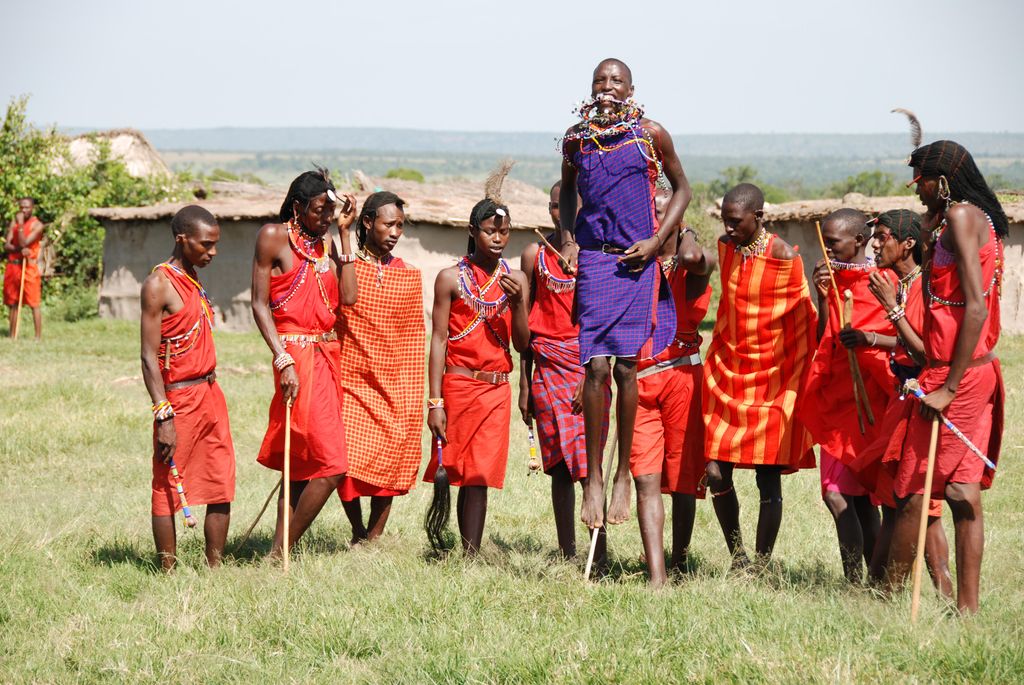
After breakfast, enjoy a relaxed morning in the Ngorongoro Highlands.
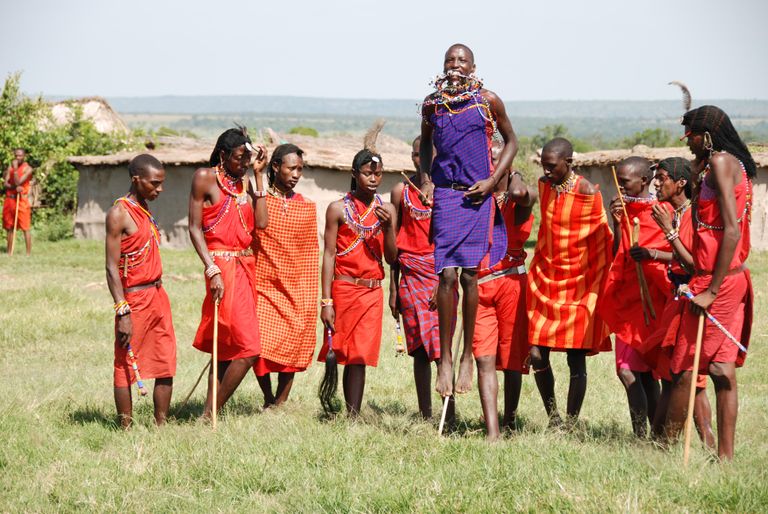
Today includes a respectful Maasai cultural experience arranged with a recognized community.
The Maasai are pastoral people whose identity, social traditions and economic life have historically been closely connected to cattle.
Maasai communities live across parts of northern Tanzania and southern Kenya, including areas within and around the Ngorongoro Conservation Area.
During the visit, community representatives may share information about:
- Cattle and pastoral life
- Family organization
- Age-set traditions
- Housing
- Food
- Clothing and beadwork
- Education
- Conservation
- Livestock challenges
- Modern economic changes
- Community tourism
The exact content will depend on the hosts and the structure of the visit.
Guests may be welcomed with songs or dancing, but these activities should be community-led and not treated as entertainment that must always be performed.
There may also be opportunities to visit a home, view beadwork or learn about livestock management.
Photography should only take place with permission.
After the cultural experience, return to the lodge for lunch or continue with a short scenic drive through the highlands.
Spend the afternoon at leisure.
This additional highland night helps create a relaxed program before the long and wildlife-rich Ngorongoro–Serengeti day.
Depending on the accommodation and local conditions, optional activities may include:
- Coffee-estate visit
- Guided nature walk
- Garden tour
- Village walk
- Spa treatment
- Swimming
- Birdwatching
- Sundowner
- Visit to a local market
Dinner and overnight in Karatu or the Ngorongoro Highlands.
Ngorongoro Crater Safari and Central Serengeti
Ngorongoro Crater Safari • Scenic Drive to Serengeti • Wildlife Arrival
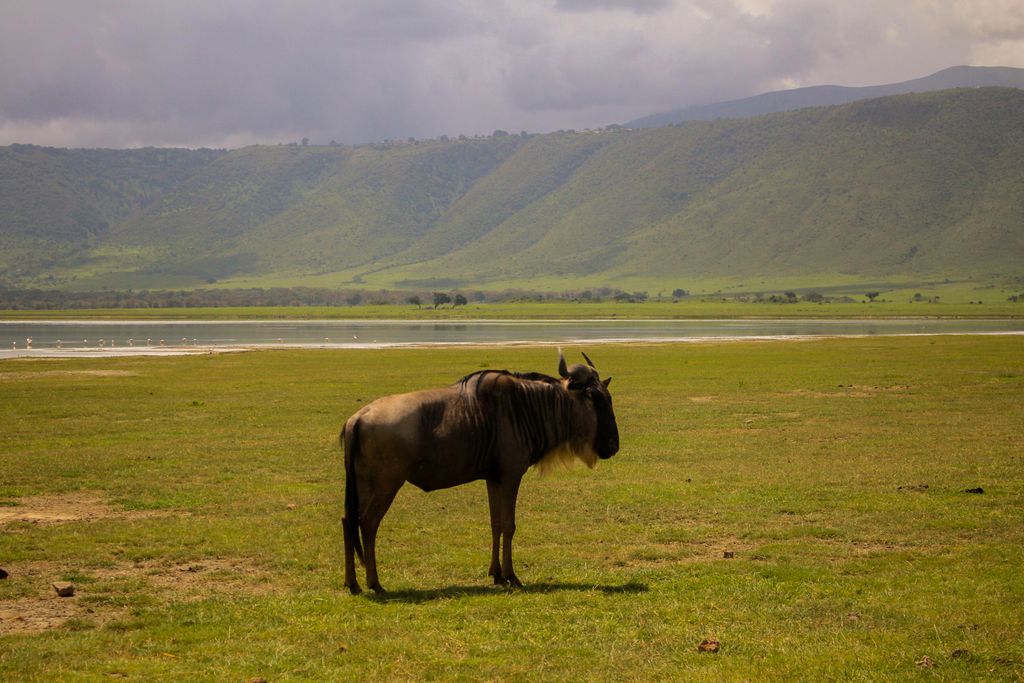
Depart early after breakfast and travel into the Ngorongoro Conservation Area.
Continue to the crater rim, where viewpoints may provide dramatic panoramas across the caldera.
Descend approximately 600 metres to the crater floor.
Ngorongoro Crater is the world’s largest intact volcanic caldera and one of Africa’s most celebrated wildlife areas.
The crater floor contains grassland, forest, freshwater springs, swamps and an alkaline lake. These habitats support a high concentration of large mammals within a relatively compact area.
Possible wildlife includes:
- Lions
- Cape buffaloes
- Black rhinoceroses
- Wildebeest
- Zebras
- Hippos
- Warthogs
- Gazelles
- Servals
- Numerous bird species
The crater is one of Tanzania’s better locations for searching for the endangered black rhinoceros, but sightings cannot be guaranteed.
Explore the Lerai Forest, open grasslands, wetlands and Lake Magadi area.
Enjoy a picnic lunch at a designated site.
In the early afternoon, ascend the crater wall and continue toward Serengeti National Park.
The route passes through the Ngorongoro Conservation Area and across open plains where Maasai livestock, wildlife and pastoral communities may be seen within the multiple-use landscape.
Enter Serengeti National Park through the appropriate gate and begin an en-route game drive toward Central Serengeti.
Arrive at your lodge or tented camp in the late afternoon or early evening.
Dinner and overnight in Central Serengeti.
Important Operational Note
This is the longest overland day of the itinerary.
Guests depart early, complete the crater safari during the morning and continue to Central Serengeti in the afternoon.
Travelers who prefer a slower pace may add an additional night in the Ngorongoro Highlands.
Full-Day Central Serengeti Safari
Full-Day Serengeti Safari • Big Cats & Wildlife • Flexible Game Viewing

Spend a full day exploring Central Serengeti.
The Central Serengeti and Seronera region contain a mixture of open plains, acacia woodland, seasonal streams, river valleys and granite kopjes.
Permanent water sources support resident wildlife throughout the year.
Begin with an early morning game drive when temperatures are cooler and predators may still be active.
Search for lions around kopjes and grasslands, leopards resting in riverine trees and cheetahs scanning open areas.
Possible wildlife includes:
- Lions
- Leopards
- Cheetahs
- Elephants
- Giraffes
- Buffaloes
- Wildebeest
- Hartebeest
- Spotted hyenas
- Jackals
- Warthogs
- Hippos
- Crocodiles
- Vervet monkeys
Your private guide will adapt the day according to wildlife reports, guest interests, road conditions and weather.
You may choose a full-day game drive with a picnic lunch or separate morning and afternoon game drives with a midday break at the accommodation.
The flexible schedule is particularly valuable for photographers, families and guests who prefer not to remain in the vehicle throughout the entire day.
Return to your accommodation for dinner and overnight.
Second Full Day in Central Serengeti
Second Serengeti Safari Day • Explore More Wildlife Areas • Final Evening in the Wild
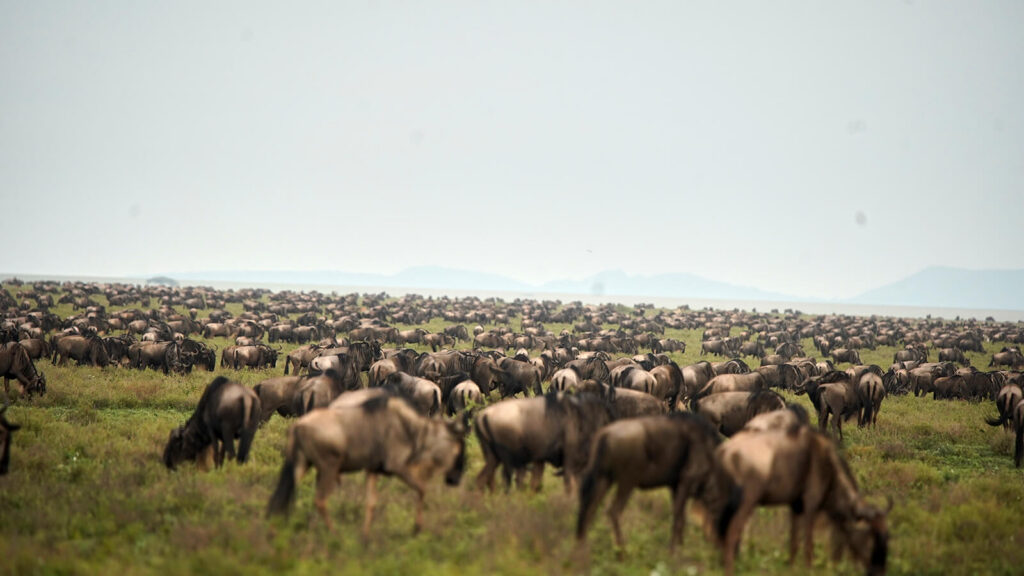
Enjoy another complete day in Central Serengeti.
Three nights in the region provide an important advantage.
Rather than attempting to see everything during a single full day, your guide can explore different areas, respond to recent sightings and adjust the route according to wildlife behavior.
The morning may focus on river valleys, wooded areas and kopjes where leopards and lions are sometimes found.
The afternoon may be spent on more open plains in search of cheetahs, elephants, giraffes and grazing animals.
Depending on the season, migratory wildebeest and zebras may also pass through or near Central Serengeti. Their location changes throughout the year and cannot be guaranteed.
Birdwatchers may encounter:
- Secretary birds
- Kori bustards
- Ostriches
- Vultures
- Eagles
- Storks
- Rollers
- Bee-eaters
- Hornbills
- Weavers
- Ground birds
- Seasonal migrants
An optional sunrise balloon safari may be arranged at additional cost, subject to availability, weather and operational conditions.
Balloon guests usually begin before dawn, fly over part of the Serengeti landscape and finish with a bush breakfast before rejoining the safari guide.
Guests who do not choose the balloon experience can enjoy a conventional early morning game drive.
Return to your accommodation in the late afternoon.
Enjoy your final dinner in the Serengeti.
Morning Serengeti Safari, Flight to Arusha and Departure
Final Serengeti Safari • Flight to Arusha • Departure Transfer
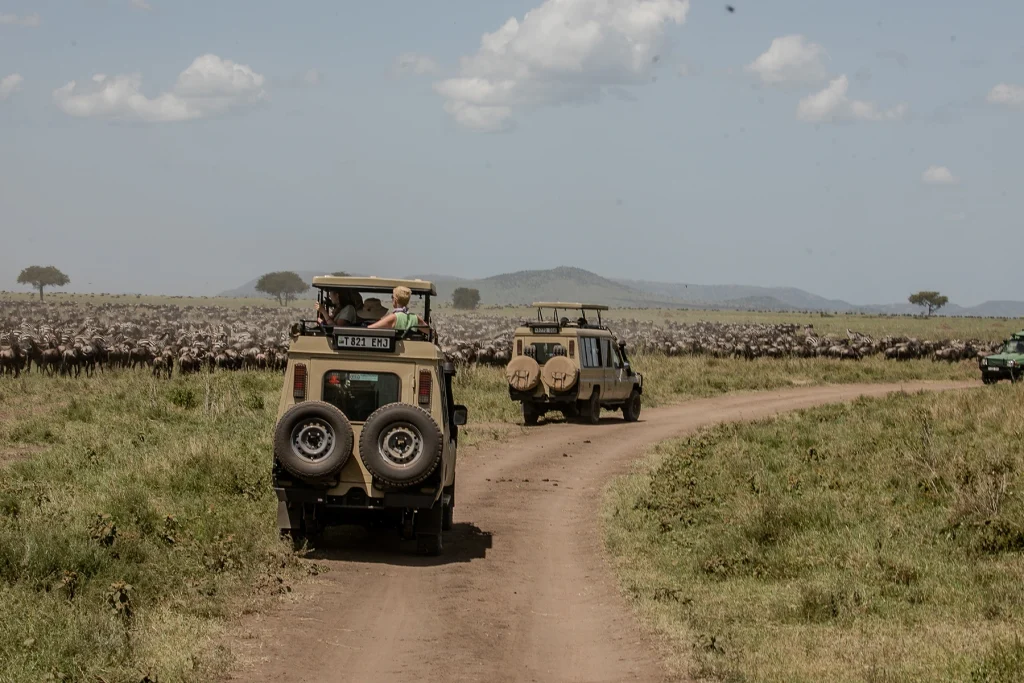
Enjoy an early breakfast and a final game drive, depending on the scheduled flight time.
Transfer to the nearest operational airstrip and board a scheduled light-aircraft flight to Arusha.
The flight may make stops at other airstrips to collect or drop off passengers.
During clear weather, the journey may provide aerial views of the Serengeti plains, Ngorongoro Highlands, Rift Valley landscapes and agricultural areas near Arusha.
Upon arrival at Arusha Airport, meet a Quest Horizon Safaris representative.
Depending on your international flight schedule, arrangements may include:
- Transfer directly to Kilimanjaro International Airport
- Day room in Arusha
- Lunch
- Shopping
- Coffee experience
- Additional Arusha overnight
- Connection with another Tanzania itinerary
- Zanzibar or regional flight
Transfer to the airport for your onward journey.
Inclusions
- Private airport transfer on arrival
- Private airport or airstrip transfer on departure
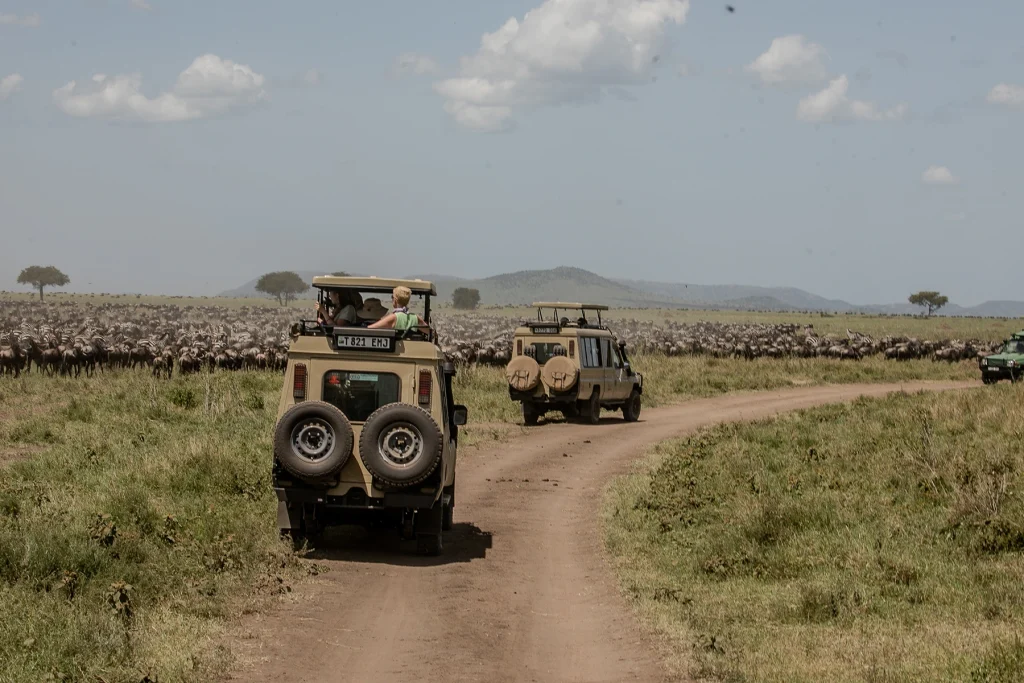
- Private 4×4 safari Land Cruiser with pop-up roof
- Professional English-speaking safari guide
- Eleven nights of accommodation
- Meals as stated in the confirmed quotation
- Arusha National Park entrance fees
- Guided Arusha National Park walking safari
- Armed park-ranger fees for the walking safari
- Tarangire National Park entrance fees
- Lake Manyara National Park entrance fees
- Ngorongoro Conservation Area entrance fees
- Ngorongoro Crater service fee
- Serengeti National Park entrance fees
- Serengeti concession or camping fees where applicable
- Mto wa Mbu cultural-tour fees
- Local Mto wa Mbu guide
- Local lunch during the Mto wa Mbu experience
- Hadzabe cultural-experience fees
- Datoga cultural-experience fees
- Local Lake Eyasi guide or interpreter
- Maasai cultural-experience fees
- Scheduled flight from Central Serengeti to Arusha
- Airstrip transfer
- Picnic lunches where required
- Bottled drinking water in the safari vehicle
- Flying Doctors emergency evacuation cover during the safari
- Government taxes and statutory levies
- Safari briefing and local operational support
Exclusions
- International flights
- Tanzania visa fees
- Comprehensive travel insurance
- Personal medical insurance
- Vaccinations and medical expenses
- Alcoholic and premium beverages
- Drinks not included by the selected accommodation
- Tips and gratuities
- Personal expenses
- Laundry unless included by the accommodation
- Optional activities
- Serengeti balloon safari
- Optional spa treatments
- Optional bicycle tour
- Additional meals not specified
- Day-room use after the Serengeti flight unless included
- Additional accommodation before or after the itinerary
- Costs arising from delays, cancellations or missed connections
- Services not specifically listed as included
Visa & Entry Requirements
Most visitors need a visa to enter Tanzania for tourism. Requirements vary by nationality, so confirm your specific situation on the official Tanzania Immigration Services eVisa portal before you travel
Select your citizenship


More trips
 Year-round• 5 DAYS / 4 NIGHTSBeach Holiday & Cultural Experience
5 Days Zanzibar Beach Holiday
Stone Town • Zanzibar Beach • Zanzibar IslandsPrivate tailor-made safari Year-round• 12 DAYS / 11 NIGHTSPrivate Northern Tanzania safari and Zanzibar holiday
12 Days Tanzania Safari, Stone Town and Zanzibar Beach Holiday
Arusha • Tarangire • Ngorongoro Crater • Serengeti • ZanzibarPrivate tailor-made safari July to October• 5 DAYS / 4 NIGHTSPrivate Northern Tanzania Wildlife Safari
Wings Over Migration 5 Days Northern Serengeti Fly-In Safari
Arusha • Serengeti • ArushaPrivate tailor-made safari Year-round• 14 DAYS / 13 NIGHTSPrivate or small-group overland adventure
14 Days Young Adults Northern Tanzania Adventure Safari
Arusha • Tarangire • Lake Manyara • Lake Natron • Serengeti • Ngorongoro • Lake EyasiPrivate tailor-made safari- Year-round• 10 DAYS / 9 NIGHTSPrivate Luxury Great Migration and Big Five Safari
10 Days Tanzania Safari and Zanzibar Beach Holiday
Arusha • Tarangire • Ngorongoro Crater • Serengeti • Zanzibar • DeparturePrivate tailor-made safari and beach holiday  Year-round• 10 DAYS / 9 NIGHTSPrivate Luxury Great Migration and Big Five Safari
10 Days Tanzania Safari and Cultural Experience
Arusha • Tarangire • Lake Eyasi • Ngorongoro • Serengeti • Fly BackPrivate tailor-made safari
Speak to an Expert
Let one of our Quest Horizon Safari specialists design
your tailor‑made African adventure